Here’s a neat little website that lets you enter a movie or TV show, and tells you what streaming services it’s available.
(Thanks to my friend Celine who pointed me to this on Facebook)
Here’s a neat little website that lets you enter a movie or TV show, and tells you what streaming services it’s available.
(Thanks to my friend Celine who pointed me to this on Facebook)
Here’s a list of the new movies on Netflix this month.
Of these, I recommend:
12 Angry Men: One of the original Courtroom dramas. If you like that sort of thing, it’s definitely worth checking out. Also a good lesson for any filmmakers interested in microbudget movies, as it tells a compelling story that mainly consists of people talking to each other in one room.
Hitch (July 14): I’m not saying this is a great movie, but it is an enjoyable movie. Features Kevin James at his most likable, and Will Smith in a rare straight-comedy role rather than action or drama. The concept of a “date doctor” who teaches men how to seduce women could easily be creepy, but the film handles it in a tasteful way that earns your affection.
Lost Girl Season 4 (July 24): A Canadian series about a succubus private detective whose cases involve magical Fae, this is an excellent show that most Americans have never heard of. If you liked Buffy the Vampire Slayer, you’ll probably enjoy Lost Girl. Also it has some nice eye-candy no matter which gender you prefer; Anna Silk is gorgeous, and my wife inists that Kris Holden-Ried is the hottest man on TV. The first 3 seasons are already on Netflix, which will give you time to catch up before the fourth season becomes available on the 24th.
Other movies you’ve heard of that are new to Netflix this month:
This is some screenwriting/story theory geekery here, but I think that if you like movies you’ll probably be interested in this. It’s a theory I’ve developed about why some movies work and some don’t.
There are certain movies that I call Spectacle Movies, which throw out all the craft of storytelling and instead focus on the spectacle. Either with compelling visuals, thrilling action, hilarious comedy, or engaging song and dance. If the spectacle is spectacular enough, the movie can work despite having massive logic problems and flawed, cliched, or non-existent story and character development.
Examples include the original King Kong, Marx Brothers, Raiders of the Lost Ark, most musicals, and (though I wasn’t personally a fan of these) 2001 and Avatar. These aren’t stories. They’re showcases for tangentially connected bits.
Just to be clear, I’m not using Spectacle Movies as a pejorative. Two of my all-time favorite movies are Raiders of the Lost Ark and Singin’ in the Rain, which are both horribly crafted stories if you ignore all the ways the movies are awesome. Singin’ in the Rain literally has an entire sequence that consists of someone saying “I thought of a good song and dance number,” and then it cuts to his imagination for ten minutes. But it works, because it is a really good song and dance number.
But spectacle isn’t a binary thing. It’s a continuum. With the exception of straight drama, all movies have some element of spectacle. And the more spectacle a movie has, the more story and character problems it can get away with.* For a well-crafted story, adding spectacle will make a good movie better. (We all love Jurassic Park, but who would remember that movie if we never actually saw the dinosaurs?)
I would define spectacle as “Showing something amazing that the audience hasn’t seen before.” The more a movie can do that, the better it will be. This is true regardless of the quality of the underlying story.
Now lets talk about sequels, and why sequels so often leave the audience feeling empty.
Movies that get sequels are almost always movies that have a lot of spectacle to them, whether or not they also have good storytelling. There are two reasons for these. The first and most obvious reason is that spectacle movies do well at the box office, especially internationally, and financially successful movies attract sequels. But the more subtle reason is that in a well-crafted story, the end of the story is the end of the story. The problems are resolved. The character has completed an arc, and no longer has room to undergo a completely new arc.** Whereas spectacle movies end when the bad guys are defeated and the explosions stop. But you can always find new bad guys to generate new explosions.
But remember when I said that a key element of spectacle is showing something we’ve never seen before? That presents an inherent problem with sequels, because by default the sequels are showing us exactly what we’ve seen before.
So sequels tend to lose the spectacle aspect that made people like the original. Which means that as a baseline sequels are going to be much less compelling.***
There are two ways for a sequel to overcome this: It can either ramp up/change the spectacle, or it can improve the story.
Examples of movies that ramped up or changed the spectacle, so it was still showing us something we hadn’t seen before, are Aliens, Terminator 2, The Empire Strikes Back, Return of the Jedi, and Avengers.
Examples of movies that improved the story are Spider-Man 2, X-Men 2, Toy Story 2, Indiana Jones and the Last Crusade, Terminator 2, and The Empire Strikes Back. (T2 and Empire both ramped up the spectacle and improved the story.)
But most sequels just give us more of the same. More of the same doesn’t work for spectacle. And without a story to carry them, they’re left with nothing. Which is why most sequels are so bad. They may be commercially successful, and in fact usually are, which is why Hollywood keeps making them. People show up based on how much they liked the original.
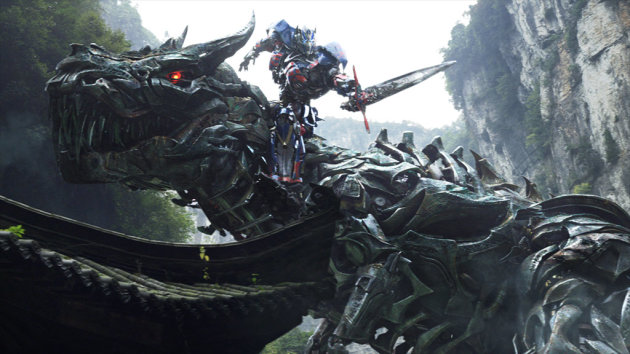
But I judge the quality of movies based on how much the audience cares about them. By that measure most sequels fail. Which is why Transformers 4 had a hundred million dollar opening weekend but only 16% on Rotten Tomatoes. (And keep in mind the Rotten Tomatoes percentage is only from people who saw the movie. Meaning that among people who *thought* they would want to see a movie where a giant alien robot truck rides a gianter alien robot dragon while waving a huge sword, only 16% actually did enjoy it.)
* For example, the 2009 Star Trek was obviously much dumber than Looper. But Star Trek keeps you moving too fast with exciting action to think about how little sense it makes. Whereas Looper is slow and contemplative, which leaves you with time to contemplate all the story and logic problems.
** The only example I can think of of a successful sequel to a movie that didn’t rely on spectacle is The Godfather 2. And that only half-worked by focusing on flashbacks of a supporting character that didn’t have an arc in the first movie. In my opinion, the Michael half of Godfather 2 didn’t work and aside from one or two scenes was entirely forgettable.
*** One interesting point here is that perceived quality depends on the order you see a film. We all think Raiders of the Lost Ark is great and Temple of Doom is mediocre. But if we saw Temple of Doom first, would we think that was the great one? Or consider the 1964 movie A Shot in the Dark, which is a sequel to the 1963 The Pink Panther, and recycles all of the jokes from the original. If you watch The Pink Panther then Shot in the Dark, you’ll think Shot in the Dark is boring and pointless. But if you watch Shot in the Dark first, you’ll think Pink Panther is the boring and pointless one. (Or if you don’t like 1960s slapstick humor, you’ll think both are boring and pointless.)
I thought that Ready Player One was one of the most entertaining books I’ve read in the last few years, so it’s exciting to hear about progress being made on the film adaptation.
If you haven’t read that book, I highly recommend it. Especially if you were a geeky teenager in the 80s, as you’ll be able to relate to all the references. But you don’t *need* to be of the right age. I’m slightly too young to have experienced much of what the book talks about, but I still loved it.
I have mixed feelings about Zak Penn. He tends to work on films that go through a lot of screenwriters, so it’s hard to get a feel for his writing or clarity on whether he’s responsible for the good parts or the bad parts. I loved Last Action Hero, X-Men 2, and The Avengers. But then he also worked on Inspector Gadget (the movie), Elektra, and X-Men 3.
Also, you should take this news with a grain of salt. There are approximately 10 times as many movies in pre-production as actually get released, so until a film has a director and cast announced, it’s not real. (And even then, there’s no guarantee it will actually come out.) But it’s exciting to think about this movie.
Also, if you like Ready Player One, you should watch the movie Fanboys, which was written by the same person. (And if you like Fanboys, you should read Ready Player One.)
I found this Buzzfeed interesting. Someone who was 10 when the 1989 Tim Burton Batman movie came out watched it with a 24-year-old who had never seen it.
This gives a fresh perspective on both a genre-creating movie that helped launch the idea of summer blockbuster comic book films, as well as on the late 80s in general.
Definitely worth a read for anyone who remembers the movie. (And if you don’t remember the movie, it’s worth rewatching.)
Absurdity of the day: When someone laughs about how ridiculous it is that Optimus Prime is waving a giant sword while riding a giant alien robot fire-breathing dragon, and then someone else feels the need to correct them that he’s actually riding a giant alien robot fire-breathing dinosaur.
Because that’s totally different.
(I continue to be too busy for more Movies We Still Care About. I promise I’ll return to that series soon. In the mean time, here’s a fast food review.)
In one of my screenplays, an alien visiting Earth sums up my own opinion on Taco Bell when he says, “They have 43 menu items that are all the same thing but shaped differently. It’s amazing.”
The Taco Bell Quesarito is a new configuration of the same ingredients, and it succeeds in improving on their old combinations. It won’t blow you away like the Doritos Locos Taco or the Cinnabon Delight (two of Taco Bell’s best innovations from the last few years), but in my opinion it is significantly better than Taco Bell’s similarly sized and priced burritos.
At my local Taco Bell, the Quesarito ranged from $1.99 to $2.99, depending on whether you got beef, chicken, or steak. (I chose the steak.) It was a lot smaller I expected, only marginally bigger than their Grillers. But it packs 650 calories into that small size, compared to 350-450 calories for the Grillers.
What really makes it work is the cheese. They somehow managed to split the difference between semi-solid melted real cheese and liquid processed fake cheese, to come up with something that is deliciously gooey, but is held in place between the layers of tortilla. It’s a lot more cheese than is typically in one of their burritos, which is kind of the point.
In terms of how it actually looked inside, there wasn’t a huge difference between the photo on their website and reality. (Other than the site photos is ground beef but I ordered the steak.) If anything, I’d say reality had the ingredients better mixed.


Side note: Taco Bell stole the idea from Chipotle’s “secret” menu. I’ve never tried a Chipotle Quesarito. Regular Chipotle burritos are already too much food for me, and I typically only go there during the lunch rush when they wouldn’t be willing to make it. But I would be interested in a comparison, and to see how Chipotle’s unprocessed ingredients compare to Taco Bell’s more processed food. Then again, a Taco Bell Quesarito is 1/4 the price of Chipotle’s, so that’s something to consider.
To sum up, I recommend the Taco Bell Quesarito, and will definitely get it again.
I recently read this noxious and silly article in Slate, about how adults who enjoy popular fiction that is billed as Young-Adult should be embarrassed that they read and enjoy it.
The article is easily dismissible pretentious crap. The author comes off as someone who is bitter over her inability to write books that people want to read. Rather than accepting that she’ll never be more than a niche author, or learning how to be a better writer so she can appeal to a larger audience, she blames the world in general for not recognizing her brilliance.
Plenty of other people have already criticized or mocked the piece. (If you were aware of it at all before reading this blog post, it was probably because one of your Facebook friends was ripping it apart.) I’m writing about it because the piece inadvertently brings up a key point about story, and how it relates to both popular/young-adult novels and “classic”/sophisticated/pretentious literature.
At its basic level, a story is about a sympathetic character pursuing a difficult and meaningful goal. The story is the vehicle through which a movie or book conveys emotion to its audience. It’s what ties a book/movie together. Without that central story, it’s just a bunch of stuff that happens.
Story isn’t the only aspect of a book. There are many others, such as character development, style of writing, literary allusions, symbolism, theme, mood, atmosphere, morals, metaphors, point of view, interesting ideas, moral ambiguity, and probably fifty more that you can think of.
The key difference between “literature” novels and popular or YA novels is that the literature novels incorporate a lot more of these aspects into the writing. To the extent that these aspects are done well, they improve the book. That’s a good thing.
But the problem is that many of these “literature” type novels focus so much on the other aspects of writing that they don’t bother with an actual story. So the book ends up being just a bunch of stuff that happens, or even worse, a whole lot of nothing happening.
Without the story, most people aren’t able to truly engage with the book. And without that engagement, they’ll be too bored to appreciate any of the other literary qualities.
This doesn’t apply to everyone, of course. There are people who are capable of enjoying literary qualities without a story. But people who enjoy story-free literature will always be a small niche compared to the broader public.
(To be clear, I’m not saying this applies to all literature-style novels. There are plenty of pieces of classic literature with very strong stories. Brilliant works like To Kill a Mockingbird, 1984, Huckleberry Finn, or most of Shakespeare’s plays. These are works most people can enjoy.)
By contrast, YA books tend to lack these literary qualities. Without flowery language and symbolism to hide behind, all they have left is story. If they have a strong enough story, they’ll be enjoyable to the general audience. (Excluding pretentious twits who want to look down on books that normal people like.)
Going back to that silly article in Slate, it seems to revel in how superior it is for a book to *not* have a story. Praising some of the author’s favorite books explicitly because they have unlikable characters and a complete lack of a coherent ending.
That’s not to say she’s somehow wrong for liking those books. Her tastes are her tastes. Though I pity her inability to enjoy books most people like, I envy her ability to enjoy books most people would find boring. I also envy people with the ability to enjoy televised golf. In both cases, they have options for entertainment that would not be enjoyable to me, so they’re better off. Life is more amusing when you’re easily amused.
But having personal tastes that allow you to enjoy storyless literature, like having person tastes that allow you to enjoy televised golf, does not give someone any sort of moral superiority. And anyone that suggests it does deserves to be mocked.
Here’s a list of the new movies on Netflix this month.
Of these, I recommend:
Carrie (1976): Based on Stephen King’s first book, this is a tight and effective horror-thriller. A bit slowly paced by today’s standards, but definitely worth checking out.
Clear and Present Danger: Probably the best of the Jack Ryan movies. This is an exciting thriller that combines solid action sequences with tense spy stuff.
Sherlock Season 3: If you haven’t been watching the BBC Sherlock series, reimagining the Sherlock Holmes stories into the modern day, you really should. Each season is three TV movies, and they’re amazing. In this third season, the show takes a radical departure from the original stories, but it works well.
Wayne’s World: One of my favorite comedies of all time. This is filled with zany hilarity and extremely quotable.
Other movies you’ve heard of that are new to Netflix this month:
Still too busy doing work at work to write the next entry of Movies We Still Care About. So instead of actual content, here’s a Buzzfeed article I found amusing.
 Cinema Badger